Broadcom–Anthropic Financing: Who Bears the Risk in the $63 Billion Plan?
A $63 billion equipment-financing structure distributes risks among lenders, Broadcom and Anthropic. Announced funding is different from delivered capacity and earned profit.
By The Strategic Newb Editorial Team
Event: · Published: · Updated:
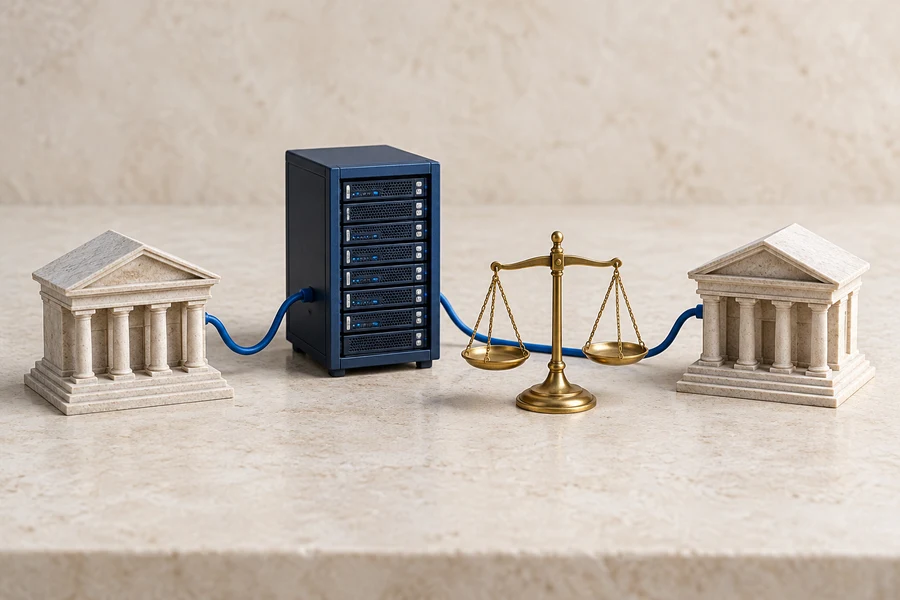
AI-generated with OpenAI image generation for The Strategic Newb
Update, 27 October 2026: this article now covers the financing structure announced on 26 October. It retains its original publication date and route. The earlier report about a potential $42 billion facility is historical context, not a directly comparable measure of the new transaction.
Bank of America, Blackstone, Citi and Morgan Stanley have announced a $63 billion transaction involving Broadcom equipment for Anthropic. A new special-purpose vehicle, a company created for a defined transaction, is to buy the equipment and lease it to the AI developer. Deliveries are expected from 2027. Joint announcement, 26 October
The economic question is how future computing income supports equipment bought today. Financing can bring a project forward, while distributing its risks among the customer, lenders and technology supplier.
- Announced financing is different from equipment delivered or revenue earned.
- Different creditors can have different priority over the same assets.
- Supplier support can shift risk; it does not make that risk disappear.
What the new structure adds
Reuters reports that the banks are arranging first-lien financing, while Blackstone provides the committed portion of second-lien financing. Broadcom offers residual-value support linked to the first-lien amount. Reuters, 26 October
A lien is a creditor's claim against assets used as security. First-lien creditors generally stand ahead of second-lien creditors when recovering value from that security. The order matters if the assets cannot repay everyone. It does not establish the precise recovery each lender would receive in this transaction.
Residual value means what equipment is worth later, after use. Support for that value can reduce part of a lender's exposure while creating a contingent obligation for the supplier. Contingent means dependent on specified events, rather than necessarily requiring money to be paid immediately. The joint release is not a substitute for the complete contractual terms.
Why $63 billion is not simply $42 billion plus $21 billion
The earlier version of this article discussed Reuters' 1 October reporting on a potential Broadcom financing facility of up to $42 billion for Anthropic. That described supplier financing within a broader commercial relationship. Reuters, 1 October
The new announcement describes financing through a separate vehicle that buys and leases equipment. A facility limit, a transaction total, a lease commitment and a supplier's contingent exposure are different measures. Subtracting one headline number from another would not establish incremental lending. This update therefore makes no claim that $21 billion has simply been added or that the older facility has been cancelled.
The equipment has to earn its keep
A financing structure solves the timing problem of paying for infrastructure before all its income arrives. It does not prove that demand will be sufficient. The commercial chain still depends on equipment being delivered, operating reliably and supporting services customers will pay for.
High utilisation means equipment is used frequently enough to spread its costs across more work. Low utilisation leaves fewer paid workloads supporting the same investment. Better technology can improve performance, but rapid technological change can also affect the resale value of older equipment. These are general economic mechanisms, not forecasts of this project's outcome.
The parties face different exposures. A lessee needs usable capacity and manageable payment obligations. Lenders need repayment. A supplier benefits from equipment demand but must assess any support it has promised. These interests can align during strong growth and become harder to reconcile when revenue disappoints.
What a beginning investor should distinguish
An equipment supplier's sales, its cash receipts and its financing commitments are not interchangeable. A large transaction can support future business without becoming immediate profit. Similarly, the existence of bank funding does not independently validate an AI company's future earnings.
The strongest evidence here concerns the announced structure, with Reuters confirming the announcement. Future deployment and returns remain unproven. The announced delivery horizon begins in 2027; no more precise start date or completed drawdown is assumed.
What to watch next
The useful next evidence includes completed financing, equipment deliveries, contractual disclosures and actual lease performance. Over the following one to three years, usage and customer cash generation would show whether the capacity can sustain its obligations. That is an analytical horizon, not a promised profitability date.
The broader lesson is that financing changes who pays first and who bears particular losses. It cannot remove the need for the underlying computing services to create economic value. This article explains that mechanism and offers no trading recommendation.
Sources
- Bank of America and partners: joint announcement, 26 October 2026, 4:15 p.m. Eastern; linked above.
- Reuters via WHBL: financing report, 26 October 2026; linked above.
- Reuters via MarketScreener: earlier facility report, 1 October 2026; historical context, linked above.