China’s Factory PMI Returns to Growth: What It Means
China’s factory survey returns to expansion. The small improvement raises questions about orders, cash flow and whether stronger activity can become lasting business growth.
By The Strategic Newb Editorial Team
Event: · Published: · Updated:
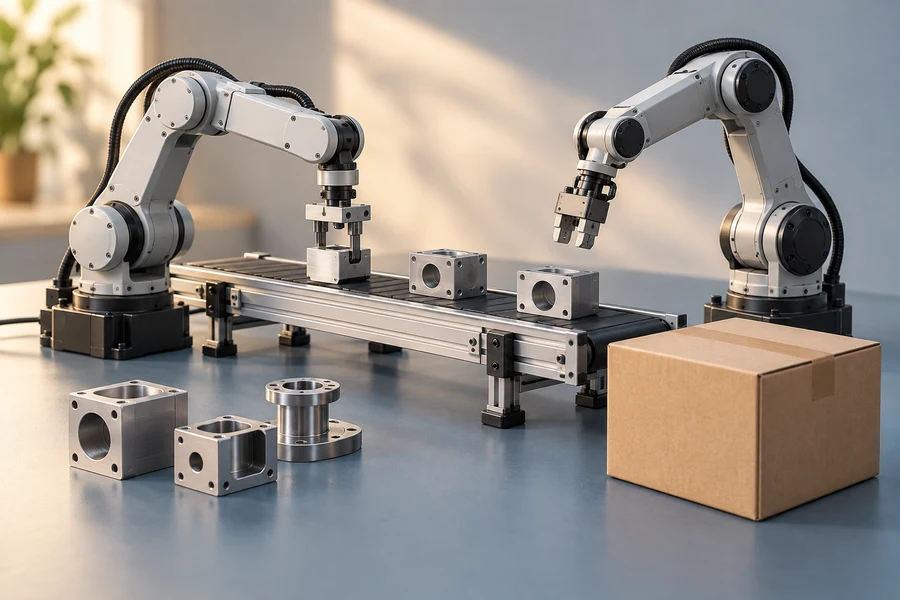
AI-generated with OpenAI image generation for The Strategic Newb
China’s official manufacturing survey moved back above the expansion threshold in September. The PMI rose to 50.1 from August’s 49.8, according to the National Bureau of Statistics release on 30 September. It is a fresh signal about factory conditions, but a narrow improvement is not proof of a broad economic recovery.
Three things to understand
- PMI measures the direction of business conditions, not the percentage growth of the economy.
- Factory output, customer orders and company profits answer different questions.
- The useful next test is whether stronger activity becomes durable demand and cash income.
A small move across an important threshold
AP independently reported the same headline result. The official breakdown adds nuance: the production index rose to 51.7, while new orders slipped slightly to 50.5. Both remained above 50. These are September survey readings compared with August, not annual growth rates or live market prices.
The purchasing managers’ index asks businesses about changes in operating conditions. A reading above 50 indicates expansion in the survey’s overall signal; below 50 indicates contraction. Think of it as a direction indicator. It cannot tell you how many yuan of extra sales a company earned, how much a particular factory produced, or what a shareholder will receive.
That distinction matters particularly close to the dividing line. A single reading slightly above it can be encouraging without settling the larger question. Investors need to understand both the direction and the durability of improvement. Treating a threshold crossing as a complete turnaround would ask one survey to do more than it can.
How a factory signal reaches other businesses
The economic mechanism starts with customers. If an equipment maker receives sustained orders, it may buy components, schedule more shifts and book transport. That can create revenue for its suppliers and logistics providers. These are possible links in a chain, not outcomes established by this month’s headline. A supplier benefits only if orders actually reach its products and customers pay.
There is also a difference between producing and selling. A factory can make goods before a buyer is secured. If those goods remain in storage, money is tied up in inventory: products that have been paid for or manufactured but have not yet generated cash. Stronger production is therefore more convincing when confirmed by sales and healthy stock levels.
For businesses outside China, exposure depends on what they sell. A machinery supplier, a shipping company and a retailer importing finished goods face different effects. More factory activity could support some orders, while tougher competition in finished products could pressure selling prices elsewhere. The same industrial development can help a customer and challenge a competitor. There is no automatic winner for every country or sector.
Revenue still has to become profit
A business earns a profit only after costs are deducted from revenue. Higher sales can coincide with expensive inputs, discounting or extra borrowing. A company may also record a sale before the customer pays. That means revenue growth, accounting profit and cash flow can move differently. None of those company-level results can be read directly from a national survey index.
Our analysis is that the most useful question now is the quality of any recovery. Is demand repeatable? Are customers paying without longer delays? Can a producer maintain prices while covering wages, energy and financing? Those questions connect the macroeconomic headline to actual business performance. They also explain why an upbeat activity signal can coexist with pressure on individual companies.
What this means for a new investor
Owning shares means owning a claim on a company, not on an economic indicator. A fund may hold businesses with Chinese customers even if those businesses are listed elsewhere. Exposure can also run through suppliers and competitors. Understanding that chain is more useful than assuming the location of a stock exchange describes every economic risk.
A better economy does not guarantee a higher share price. Prices reflect what investors already expect, as well as company earnings, financing and valuation. Valuation is the price paid relative to measures such as earnings or assets. This release supplies one piece of evidence about activity; it does not establish that any security is cheap or expensive.
What to watch next
Watch whether subsequent orders and output reports point in the same direction, then compare them with company sales, inventories and cash collection. Look for persistence across several releases rather than relying on one boundary crossing. No future release date is asserted here. The September figures are useful precisely when their limits remain visible: a modest improvement in a survey is a reason to investigate, not a completed recovery story.