Google's New TPU Systems Challenge Nvidia in Enterprise AI
Google's new TPU systems target confidential computing and memory-intensive AI, turning custom silicon into a broader challenge to Nvidia's infrastructure ecosystem.
By The Strategic Newb Editorial Team
Event: · Published:
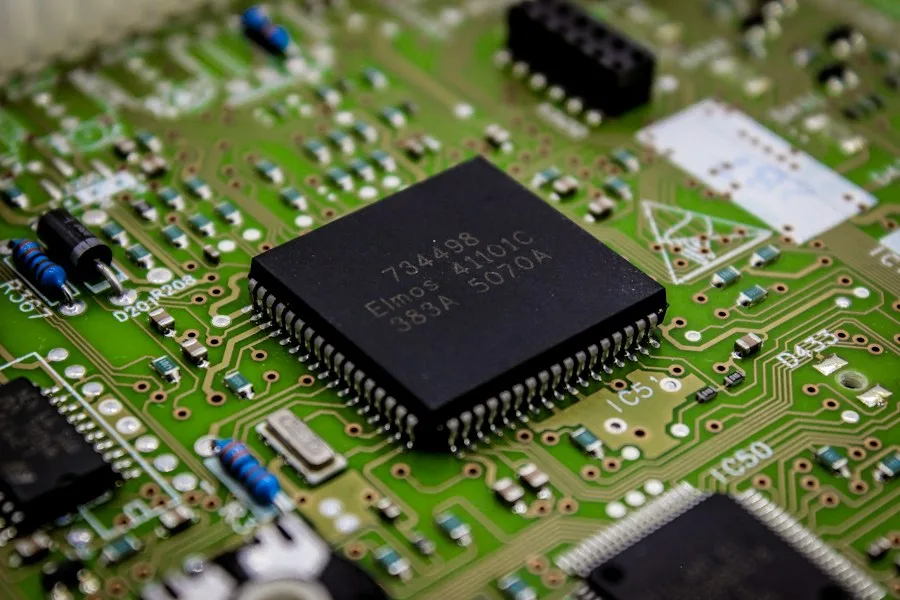
The Strategic Newb image library
Google has introduced two specialised TPU systems for secure AI and memory-intensive workloads. The announcement turns the AI-chip contest into a broader fight over complete cloud-computing systems, enterprise customers and control of the AI infrastructure stack.
Key facts
- Google announced TPU 8tx and TPU 8i Max on November 9, 2026.
- TPU 8tx combines Google accelerators with fifth-generation AMD EPYC processors and hardware-enforced confidential computing.
- TPU 8i Max combines two TPU 8i chips in one package and doubles compute, SRAM and high-bandwidth-memory capacity relative to a single TPU 8i.
- Google is targeting governments, regulated industries and large AI-agent workloads.
- Performance figures are vendor benchmarks and have not been independently verified.
What did Google announce?
Google expanded its eighth-generation Tensor Processing Unit portfolio with two systems designed for different enterprise problems.
TPU 8tx is intended for organisations that need to process sensitive information. It combines Google's AI accelerators with fifth-generation AMD EPYC host processors. Google and AMD describe it as the first cloud TPU system with hardware-enforced confidential computing.
TPU 8i Max addresses a different constraint: the amount of information an AI system can keep close to the processor. Google combines two TPU 8i chips in one package, providing twice the compute, SRAM and high-bandwidth-memory capacity of one TPU 8i.
These are specialised system configurations rather than entirely new processor generations. That distinction matters. Designing new silicon can take years, while changes to packaging, memory, networking and host processors can be introduced more quickly.
What is a TPU?
A Tensor Processing Unit is a processor designed specifically for the mathematical operations used by artificial-intelligence models.
Conventional central processing units are general-purpose machines. Graphics processors can perform many calculations in parallel and became the dominant hardware for modern AI. TPUs are Google's alternative: custom accelerators designed around the workloads used by machine-learning systems.
Google originally used TPUs mainly inside services such as Search, YouTube and its Gemini models. It has increasingly offered the hardware through Google Cloud, turning an internal cost-saving technology into a commercial product.
Why confidential computing matters
Businesses normally encrypt information while it is stored or moving between systems. The data usually has to be made readable inside memory while a processor works on it. That creates a sensitive point in the computing process.
Confidential computing uses hardware-based protections to isolate information while it is being processed. Google says TPU 8tx can protect model weights and private data during inference, fine-tuning and reinforcement learning.
This could be important for banks, governments, pharmaceutical companies, healthcare organisations and defence contractors. These sectors may have valuable data that they cannot easily send into a conventional shared cloud environment.
The technology does not remove every cybersecurity or privacy risk. Organisations must still protect identities, applications, access controls, training data and output. The economic opportunity is that hardware protection may make some previously blocked AI projects possible.
Why TPU 8i Max focuses on memory
The performance of an AI system is not determined only by the speed of its processor. The system must continually move model parameters and input data into the right place.
Large context windows make this more difficult. An AI assistant examining an entire software repository, hours of video or a large legal archive may need access to an enormous amount of information at once.
TPU 8i Max is designed to keep more of that workload close to the compute. Two TPU 8i chips are placed in one package, with additional memory capacity and bandwidth. Google says this provides more compute within the same rack footprint.
If the design operates efficiently in commercial workloads, customers may be able to run more AI work in a fixed amount of data-centre space and electrical capacity.
The economic impact: competition moves beyond the chip
The most important aspect of the announcement is not a single performance figure. Google can combine proprietary chips, AMD host processors, networking, software and cloud distribution into one commercial system.
This vertical integration can affect the market in several ways.
Pressure on Nvidia
Nvidia remains the central supplier of AI accelerators and the software ecosystem surrounding them. Google does not need to replace Nvidia across the entire market to have an economic effect. Moving a larger share of Google Cloud and external-customer workloads onto TPUs could reduce the number of Nvidia GPUs Google must purchase and give customers another negotiating option.
The greatest pressure may appear in inference, where trained models answer questions or perform tasks repeatedly. Inference is becoming a large and recurring computing expense as businesses move AI agents into daily operations.
A commercial opportunity for AMD
AMD supplies the host processors used in TPU 8tx. This illustrates how custom AI accelerators do not eliminate the market for conventional processors. They can instead create new combinations of CPUs, accelerators, memory and networking.
AMD could benefit even when a customer chooses Google's accelerator rather than an AMD or Nvidia GPU.
More AI adoption in regulated sectors
Confidential computing may allow organisations to use sensitive internal information without accepting the same level of exposure during processing. If that reduces compliance or security barriers, it could expand demand for cloud AI services.
The practical effect will depend on certification, customer testing and whether security teams trust the complete system—not only the processor.
Greater cloud-platform dependence
Customers may gain more AI-hardware choice while becoming more dependent on Google Cloud. Software designed around proprietary TPU tools can be more difficult or expensive to move to another provider.
The same integration that may lower operating costs can therefore increase switching costs and strengthen the commercial power of the cloud platform.
Who could gain and who could lose?
Google Cloud and AMD are the clearest potential commercial beneficiaries. Governments and regulated businesses could gain access to AI infrastructure designed for sensitive workloads. Companies running large AI-agent systems may benefit from higher memory and compute density.
Nvidia could lose some cloud inference demand if Google attracts more customers to TPUs. Other cloud providers may feel pressure to accelerate their own processors and confidential-computing offerings.
Smaller infrastructure suppliers could struggle as hyperscale companies sell complete systems containing chips, networking, software and cloud services. Customers could also face higher long-term switching costs if their applications become closely tied to Google's architecture.
How strong is the evidence?
The product announcement and system architecture are well supported by statements from Google and AMD and by independent Reuters coverage.
The performance comparisons require more caution. Google says TPU 8tx provides up to twice the speed of TPU 8t for its targeted workload with almost no performance penalty from the security features. These are company benchmarks. Independent tests, prices and real customer utilisation data are not yet available.
The evidence that the systems exist is Strong. Confidence in the wider economic impact is Medium because adoption, pricing and total operating costs remain uncertain.
What should businesses watch next?
The most useful indicators will be:
1. Public pricing and availability across Google Cloud regions. 2. Independent performance-per-dollar and performance-per-watt benchmarks. 3. Certifications and customer adoption in banking, healthcare and government. 4. Support for widely used AI software frameworks. 5. Evidence that customers are moving production workloads from GPUs to TPUs. 6. Changes in Google's purchases of third-party AI accelerators.
The Strategic Newb view
The AI-chip competition is becoming a contest between complete industrial systems.
Nvidia's advantage includes processors, software, networking and a large developer ecosystem. Google's response is to combine custom silicon with its own cloud, models, data centres and customer relationships.
That could be more economically significant than a faster chip alone. The company controlling the complete system can influence hardware margins, cloud prices, customer switching costs and the speed at which new AI services reach businesses.
Frequently asked questions
What is Google TPU 8tx?
TPU 8tx is a Google Cloud AI-computing system designed for confidential inference and smaller-scale training. It combines Google TPU accelerators with AMD EPYC host processors and hardware-based protection for data being processed.
What is TPU 8i Max used for?
TPU 8i Max is designed for AI workloads requiring large amounts of memory and compute, including coding assistants, mathematical reasoning, long-context agents and drug-discovery applications.
Do Google's new TPUs replace Nvidia GPUs?
Not across the entire market. They create another option for selected Google Cloud workloads and may increase competitive pressure, especially in enterprise inference.
Are Google's performance claims independently verified?
No independent benchmark was included with the announcement. The reported performance comparisons should be treated as company claims until third-party testing is available.
Editorial note: This article distinguishes confirmed product information from vendor benchmarks and projected market effects. It is not investment advice.