Greenland Defence Agreement: What the US Gains Without Owning the Island
The US, Denmark and Greenland have signed an Arctic defence agreement that identifies two additional locations for American military activity. It leaves sovereignty with Denmark and still needs parliamentary procedures before taking effect. Here is what Washington gained, what Greenland retained and which decisions come next.
By The Strategic Newb Editorial Team
Event: · Published:
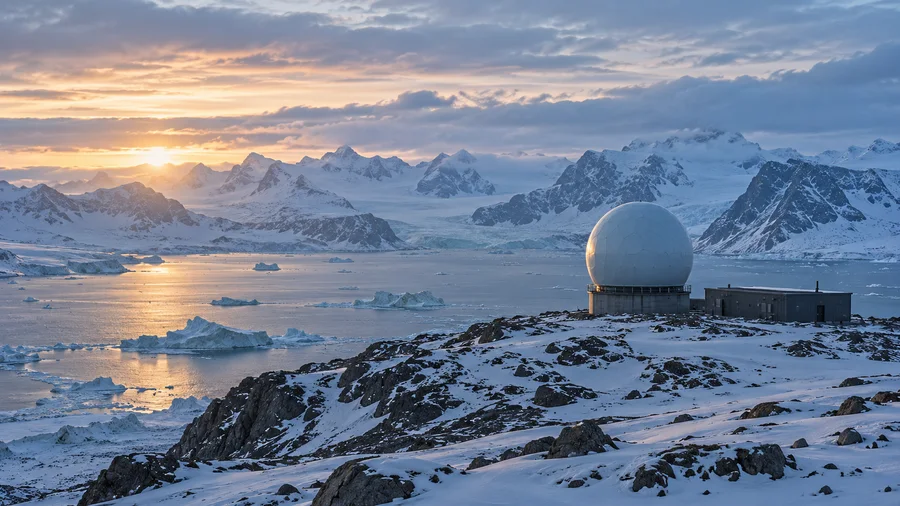
AI-generated editorial illustration / The Strategic Newb
The United States, Denmark and Greenland have signed an agreement opening the way to a larger American military presence on the Arctic island. The text identifies two additional defence areas, preserves Danish sovereignty and requires further parliamentary procedures before it takes effect.
The Greenland defence agreement signed on 22 September 2026 gives the United States a route to expand its military activity on the island, including at two locations beyond its existing Pituffik Space Base. It does not transfer Greenland to the US. The agreement recognises the sovereignty of the Kingdom of Denmark and the Greenlandic people's right to self-determination. It also has not yet entered into force. Those distinctions are central to understanding what changed. Danish government's announcement; agreement text.
US President Donald Trump, Danish Prime Minister Mette Frederiksen and Greenlandic Prime Minister Jens-Frederik Nielsen signed the agreement in New York during the United Nations General Assembly. It amends and supplements the 1951 defence agreement, which has long provided the legal basis for an American military presence in Greenland. The new text addresses a question that had become a source of friction between allies: how to accommodate US security demands without changing who governs the island.
What does the Greenland defence agreement allow?
The most concrete change concerns defence areas. The signed text says the US may modernise and expand its activities at Pituffik Space Base. It also permits additional defence areas at Narsarsuaq, in southern Greenland, and Mestersvig, in the east. The technical details and arrangements for those locations must still be agreed by the parties. Readers should therefore distinguish permission in a signed agreement from a completed or operating military base.
The text also creates a process through which further defence areas could be proposed. A party seeking one must set out matters such as its location, size, activities and measures to address its effects. Implementation details are then subject to consultation and mutual agreement. The agreement is therefore broader than a decision about two named sites, but it is not a published construction plan for an unlimited number of bases.
Another provision refers to US military access in connection with a potential Golden Dome defence system. Golden Dome is the US administration's proposed missile-defence programme. The agreement creates room for related activity in Greenland; it does not establish that a new system has already been built there or demonstrate what its eventual capabilities will be.
Agreement at a glance
Signed: 22 September 2026, in New York.
Parties: The US, Denmark and Greenland.
Existing US site: Pituffik Space Base.
Additional named locations: Narsarsuaq and Mestersvig.
Sovereignty: Remains with the Kingdom of Denmark under the agreement's terms.
Status: Signed; entry into force awaits the necessary parliamentary procedures.
Why does Greenland matter to US and NATO defence?
Greenland sits between North America and the Arctic approaches to Europe. Its position makes it relevant to warning and monitoring systems concerned with threats crossing the far north. The US already operates Pituffik Space Base, which supports missile warning, missile defence and space surveillance. Expanding access could give Washington more options for facilities and operations, though the scale and timing of those changes have yet to be settled. Associated Press.
For Denmark and Greenland, the same geography creates a difficult balance. They have an interest in collective defence, including through NATO, while Greenland's land, communities and political choices cannot be treated as incidental to that defence. The agreement's text recognises Greenlanders' right to self-determination. Frederiksen described the arrangement as rooted in NATO and respectful of the Kingdom's territorial integrity. Those statements explain the parties' intended framework; the practical test will be how future facilities and decisions are handled.
How this differs from the previous situation
American forces already had access to Greenland under earlier arrangements. The new agreement identifies two more locations for US defence areas, permits expansion at Pituffik and sets out a route for considering further sites. Reuters described it as a significant increase in prospective US military infrastructure compared with the current presence. That is the material change. It should not be mistaken for the arrival of two fully built bases on signing day.
| Date | Development |
|---|---|
| 1951 | Denmark and the US concluded the defence agreement underpinning the US military presence. |
| Before September 2026 | Disagreement over US ambitions for Greenland strained relations among the parties. |
| 22 September 2026 | The US, Denmark and Greenland signed an agreement amending and supplementing the earlier framework. |
| Next step | Necessary parliamentary procedures must be completed before the new agreement enters into force. |
Did the United States gain control of Greenland?
No transfer of sovereignty appears in the agreement. Its preamble reaffirms the sovereignty and territorial integrity of the Kingdom of Denmark and recognises Greenlanders' right to self-determination. Denmark's government also emphasised both points in its announcement.
There is, however, a difference between sovereignty and military access. The agreement gives the US a stronger framework for defence activity on Greenlandic territory. Trump presented the outcome in expansive terms, describing permanent US security control. Reuters contrasted that description with the fact that the signed deal stops short of annexation. The clearest way to read the outcome is through the published terms: more scope for US defence activity, with Danish sovereignty, Greenlandic self-determination and procedures for further decisions expressly addressed.
The arrangement has no stated end date and may be amended by mutual consent. Its text also addresses what should happen to the defence obligations if Greenland eventually becomes independent. Those provisions show that the parties are planning for a long relationship. They do not settle whether or when Greenland might choose independence.
Who benefits, and who faces pressure?
The US gains a formal route to expand its military footprint at named sites and potentially propose others. That helps address Washington's stated concern about defending North America and the wider North Atlantic. Its gain will be measured in actual access and facilities after the remaining approvals and implementation talks, rather than in the signing ceremony alone.
Denmark gains a negotiated outcome that explicitly upholds its sovereignty while allowing greater cooperation with an important NATO ally. It also assumes the political task of explaining and approving a long-term agreement shaped by a period of unusually strained relations. Reuters reported that Trump's earlier push to acquire Greenland had caused a diplomatic crisis; Nielsen subsequently said Greenlanders would need to rebuild trust with the US.
For Greenland, a central gain is its stated place in the agreement and the recognition of its right to self-determination. The pressure is practical: decisions about defence areas, land use and implementation will matter to people living on the island. A document can set principles, but residents will judge future projects by their location, effects and the degree of Greenlandic involvement. That is The Strategic Newb's assessment, rather than an outcome already measured.
Russia and China feature in the wider strategic debate, but the agreement should not be presented as evidence that either country was about to establish a Greenlandic base. Its significance lies in how the US and its allies are organising access and screening sensitive activity in the Arctic, not in an unverified claim of an imminent takeover by a rival.
What happens next?
First comes parliamentary procedure. Denmark's prime minister's office says the agreement will enter into force only after the necessary national parliamentary steps. The signed text specifies that this will be communicated to the US through a diplomatic note. Until then, reporting should describe the agreement as signed, rather than already in force.
Next come the details at Narsarsuaq and Mestersvig. The agreement names the locations but calls for mutually agreed technical arrangements. The size, timetable and exact functions of any resulting facilities are questions for subsequent decisions. Those choices will determine how substantial the American expansion becomes.
Finally comes the trust test. A signed document may ease the immediate dispute over Greenland's status while leaving disagreement about the scope of US activity. The parties have reached common language on sovereignty and defence. Their ability to apply it transparently will determine whether the agreement settles the argument or merely moves it into the implementation phase.
The Strategic Newb assessment
The central question has a precise answer: the US has gained a signed agreement for expanded military access, not ownership of Greenland. Its named opportunities are Pituffik, Narsarsuaq and Mestersvig, alongside a procedure for further proposals. Denmark retains sovereignty, Greenland's right to self-determination is recognised, and the agreement still requires parliamentary steps to take effect. The next consequential story will be what those approvals and site-specific arrangements actually produce.
Frequently asked questions
Has the US bought or annexed Greenland?
No. The signed agreement recognises the sovereignty and territorial integrity of the Kingdom of Denmark and Greenlanders' right to self-determination.
Are two new American bases already operating?
The agreement allows additional US defence areas at Narsarsuaq and Mestersvig. Their technical and practical arrangements still need to be agreed; the signing does not mean completed bases are operating.
Is the agreement already in force?
As verified for this article on 25 September 2026, no. Denmark and Greenland must complete the necessary parliamentary procedures before it enters into force. Recheck this status before later publication.
Does the agreement mean Golden Dome has been installed in Greenland?
No. The text refers to potential access connected with a Golden Dome defence system. It does not document a completed installation.
Sources
- Danish Prime Minister's Office — Agreement between Greenland, Denmark and the United States, 22 September 2026: signatories, sovereignty statement and parliamentary procedures.
- Danish Prime Minister's Office — signed agreement download page, 22 September 2026: full agreement in English, Danish and Greenlandic.
- The White House — published agreement amending the 1951 defence agreement, 22 September 2026: exact terms.
- Reuters — US, Greenland, Denmark sign deal in bid to end Arctic standoff, 22 September 2026, updated 23 September: independent diplomatic context.
- Associated Press — Trump signs US-Denmark-Greenland agreement to bolster Arctic security, 22 September 2026: independent account of the signing and existing US presence.