Intel's Israel Fab Shutdown Exposes the Fragility of AI Server-Chip Supply
Intel expects a $300 million fourth-quarter revenue hit after its Fab 28 shutdown, exposing the economic risk inside concentrated chip supply chains.
By The Strategic Newb Editorial Team
Event: · Published:
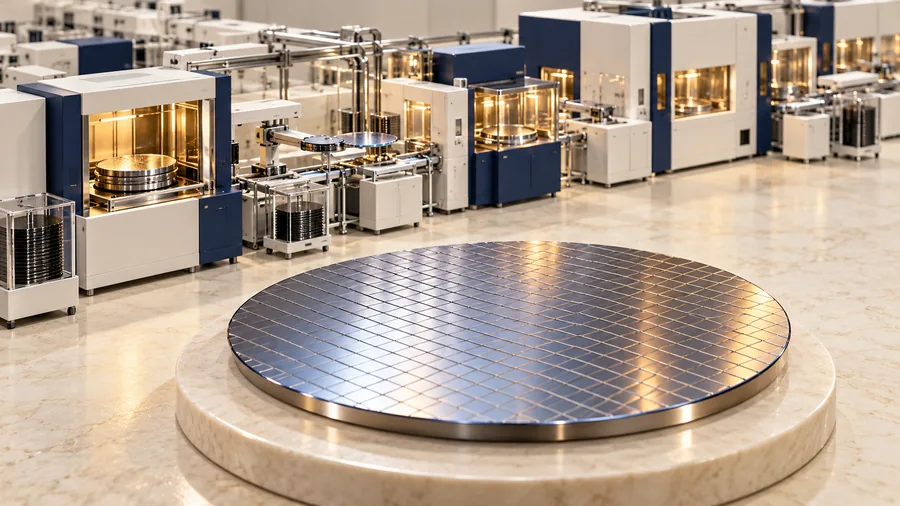
The Strategic Newb / AI-generated editorial illustration.
Intel expects its fourth-quarter revenue to be approximately $300 million lower after an explosion shut its Fab 28 semiconductor factory in Kiryat Gat, Israel, for about two weeks.
The direct financial cost is significant. The wider lesson is more important.
Advanced chips pass through long, tightly controlled manufacturing processes. When a factory stops, production cannot always be replaced quickly somewhere else. A local industrial accident can therefore become a global supply-chain event.
The October 14 explosion killed two workers and seriously injured another. The cause remained under investigation when Intel disclosed the financial impact on October 29, 2026.
What Intel disclosed
Intel said the Fab 28 shutdown would reduce fourth-quarter revenue by roughly $300 million and lower gross margin by approximately 200 basis points.
Almost all of the impact relates to 10-nanometre server products, according to the company's prepared remarks. Intel expected production to begin ramping again by the end of the week.
The company was assessing how many wafers could be salvaged. That work matters because some products already in the manufacturing process may still be completed, while others may have to be discarded.
Intel's chief financial officer told Reuters that the first quarter could see a similar effect. That suggests a preliminary two-quarter revenue impact of roughly $600 million, but the estimate is not final.
The confirmed facts are the shutdown and Intel's fourth-quarter assessment. The first-quarter effect remains an early management estimate.
How a semiconductor factory turns wafers into chips
A semiconductor factory, or fab, creates many chips on a round silicon wafer.
The process builds microscopic electronic structures layer by layer. It involves repeated stages of coating, exposure, etching, deposition, cleaning and inspection. A wafer can spend weeks or months moving through the factory before the finished chips are cut apart, tested and packaged.
The environment must be tightly controlled. Dust, vibration, temperature changes or chemical contamination can damage products that are already partway through manufacturing.
This is why a two-week shutdown can affect revenue beyond two weeks. The factory must restart safely, equipment must be checked and production must return to stable yields. Products lost during the interruption cannot be replaced instantly.
Why the Fab 28 shutdown matters to the AI economy
Server processors are essential to cloud computing, data centres and artificial intelligence systems. AI accelerators perform specialized calculations, but they still operate inside servers that need central processors, memory, networking and storage.
Intel said server demand was greater than supply. In that environment, lost production is more difficult to absorb.
If customers cannot obtain the required processors, some server deliveries may be delayed. That can postpone data-centre expansion, cloud capacity and revenue for companies further down the supply chain.
The effect may be limited if customers hold inventory, Intel recovers production quickly or alternative products are available. The incident nevertheless shows how little spare capacity may exist in strategically important parts of the chip market.
Revenue is only one part of the economic cost
Intel's estimated $300 million fourth-quarter revenue impact captures output the company no longer expects to sell during the period. The 200-basis-point gross-margin effect indicates additional economic pressure from lower production and related costs.
The incident can also affect customers.
Server manufacturers may need to adjust delivery schedules or product configurations. Cloud providers could delay installations. Distributors may face tighter availability for specific processors.
There are human and operational costs as well. Two workers died, another was seriously injured and employees had to deal with the consequences of a major workplace accident. Those effects cannot be reduced to a financial figure.
Concentration risk is not only geopolitical
Semiconductor policy often focuses on trade restrictions, military conflict and dependence on a small number of countries.
Those risks are real, but Fab 28 illustrates another form of concentration risk: an advanced production network can be disrupted by an event at one facility.
Fires, explosions, earthquakes, water shortages, power failures and equipment problems can all interrupt output. The more specialized a factory is, the harder it may be to transfer production quickly.
Building geographic resilience therefore requires more than locating factories in allied countries. It also requires duplicated capability, emergency planning, reliable utilities and enough capacity to absorb a temporary shutdown.
That redundancy is expensive. Companies must balance the efficiency of highly utilized factories against the resilience of spare capacity.
Who could gain or lose?
Intel is the most direct economic loser through lower revenue, weaker margin and recovery costs.
Server manufacturers and cloud providers could face delays if affected processors remain constrained. Customers with limited inventory or inflexible designs are the most exposed.
Competing processor suppliers could benefit if customers can substitute their products. The opportunity may be limited because changing a server platform can require technical validation, software work and supply agreements.
Manufacturers of factory-safety systems, monitoring equipment and resilient power infrastructure may receive more attention as chip companies review operational risk.
Israel faces a local economic effect through the interruption at a major industrial facility. The country also has an interest in demonstrating that high-value semiconductor operations can restart safely and reliably.
When will the impact appear?
The financial impact is immediate. Intel placed the expected revenue and margin effects in the fourth quarter.
The operational effect may continue into the first quarter because semiconductor production has long lead times. A missing wafer today can become a missing finished server chip weeks later.
The longer-term impact depends on Intel's response. Additional safety investment, inventory buffers or manufacturing redundancy could reduce future risk but increase costs.
What to watch next
The first question is whether Fab 28 returns to stable production on schedule.
The second is the number of wafers Intel can salvage. A higher recovery rate could reduce the first-quarter impact.
The third is customer delivery. Evidence of product delays or changes in server availability would show how far the disruption spreads beyond Intel.
The investigation into the explosion is also essential. Its findings may lead to safety changes at Fab 28 or other semiconductor facilities.
Finally, Intel's next financial update should clarify whether the preliminary two-quarter estimate changed.
The Strategic Newb view
The semiconductor supply-chain debate is often framed as a contest between countries. Intel's Fab 28 shutdown shows that national location is only one part of resilience.
A modern economy also depends on the safe, continuous operation of individual factories. When one plant makes a constrained server product, an industrial accident can affect revenue, customers and data-centre expansion across borders.
True chip resilience therefore requires operational redundancy as well as geopolitical diversification.
Evidence and limitations
Evidence rating: Strong. Confidence: High for the fourth-quarter impact; medium for the preliminary two-quarter estimate.
Intel confirmed the shutdown, approximately $300 million fourth-quarter revenue effect and roughly 200-basis-point gross-margin effect. The possible similar first-quarter impact is an early management assessment reported by Reuters. The final cost depends partly on the restart and recoverable wafers.
The cause of the explosion remained under investigation. This article does not speculate about responsibility.
This article provides economic analysis and does not constitute investment advice.