Micron’s Results: Memory Sales and Forecasts Are Different Tests
Micron’s new results highlight memory demand. Completed sales, future guidance and the economics of new capacity need to be read separately.
By The Strategic Newb Editorial Team
Event: · Published: · Updated:
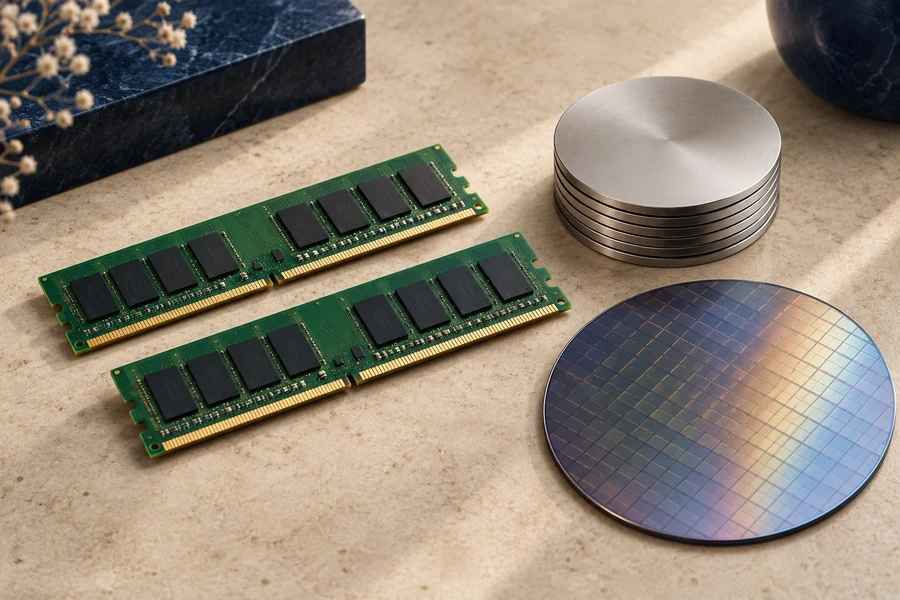
AI-generated with OpenAI image generation for The Strategic Newb
Micron’s latest results put the economics of computer memory in focus. The company reported fiscal fourth-quarter revenue of $54.23 billion on 30 September and forecast higher sales for the following quarter. These are different kinds of information: one describes a completed reporting period; the other is management’s expectation. For a new investor, understanding that difference matters more than treating an earnings headline as a trading signal.
Three key points
- Revenue records sales, not the amount left after every cost.
- A company forecast is not revenue already earned.
- Demand for memory can help suppliers while raising costs for their customers.
A completed quarter and a forward-looking range
The reported quarter ended on 3 September 2026. Micron’s revenue guidance for fiscal Q1 2027 is $61.5 billion, plus or minus $1.5 billion. The company attributes its outlook to AI-related demand and execution. Reuters also reported the stronger-than-expected revenue forecast. That reporting corroborates the announcement; it does not verify future sales. We use US dollars throughout and keep fiscal quarters separate from calendar quarters.
Why memory demand reaches beyond one supplier
Memory holds data that a processor needs while doing work; storage keeps data for later use. They are related parts of computing but are not interchangeable. More demanding software can require more of both. This is the economic mechanism, not a claim that every application has the same requirements: customers may need additional components before extra computing capacity becomes useful.
For a component producer, revenue depends on how much it sells, the prices customers pay and the mix of products. A shift toward more expensive products can lift sales without an identical increase in physical units. For an equipment builder buying those components, the same change can raise the cost of a system. Whether that cost reaches the final customer depends on competition, contracts and the ability to redesign a product.
Strong demand still has to finance capacity
Building semiconductor capacity requires equipment, facilities and time before output is available. These costs create a timing problem: a supplier commits resources today based partly on expected future demand. If capacity later grows faster than customer purchases, pricing power can weaken. If supply remains constrained, customers may face delays or higher bills. Neither outcome follows automatically from a single earnings release.
Cash flow deserves separate attention from accounting profit. A sale can appear in revenue before the customer pays, while equipment spending can consume cash before it contributes to production. A durable business needs customers, workable margins and enough funding for investment. These are general accounting and business mechanisms; this article does not estimate Micron’s future profitability or a fair share price.
What to watch next
Compare subsequent reported sales with the guidance, then examine customer demand, spending on capacity and the cash generated. The next useful evidence is execution over reporting periods, not a promise that a technology boom eliminates business cycles. A shareholder owns part of the company; buying a memory product is a different transaction. Even good operating results must be considered alongside the expectations already reflected in an investment’s price.