Microsoft’s Reported Nscale Exit Highlights AI Power Risk
A reported contract exit highlights delivery risk. Grid access, customer terms and financing determine when computing capacity can earn revenue.
By The Strategic Newb Editorial Team
Event: · Published: · Updated:
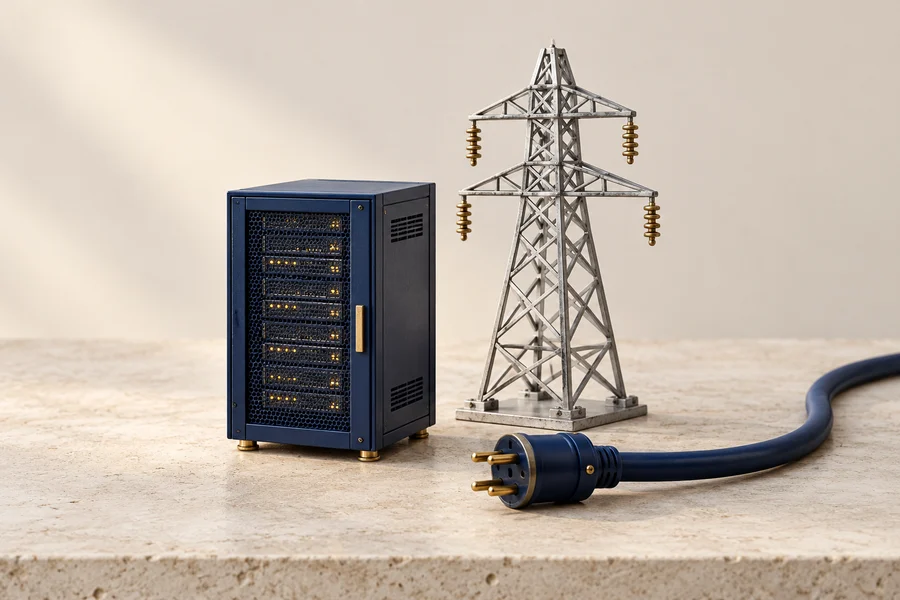
AI-generated with OpenAI image generation for The Strategic Newb
A reported break in a British data-centre contract puts a practical question at the centre of the artificial-intelligence investment story: when can a building actually receive dependable electricity? For a beginner, that question connects ambitious computing plans with the timing of revenue, financing costs and the risk of equipment sitting idle.
Three key points
- A reported contract exit is a specific business event, not evidence that worldwide demand for AI has disappeared.
- Electricity availability, connection timing and electricity prices are different constraints.
- Investors need to distinguish announced capacity from operating facilities that earn revenue.
What has been reported
Reuters reported on 18 October, citing the Telegraph, that Microsoft had ended its agreement for Nscale’s Loughton site. The reason was unspecified; Microsoft declined comment. Nscale told Reuters its wider Microsoft relationship remained strong and it was exploring alternative power for the site. The report also described grid delays. The termination date and its cause have not been independently established here.
This article examines the economic mechanism suggested by that report. It does not treat a reported electricity problem as proof of why the customer withdrew. Nor does it estimate a financial loss: the necessary contract terms, compensation arrangements and project accounts are unavailable.
A data centre needs more than a building
A data centre houses computers and supporting equipment. AI workloads can require substantial computing resources, but a server cannot deliver a service simply because it has been ordered. The site also needs power distribution, cooling, network connections and operating staff. Each part has to be ready at the right time.
That creates a coordination problem. Buying equipment early may help secure supply, yet increases the risk that expensive machinery arrives before the site can use it. Buying later can reduce that exposure but may leave the operator waiting for equipment once the building is ready. There is no universally correct sequence; the answer depends on contracts and delivery certainty.
A grid connection concerns physical access to the electricity network. An electricity purchase agreement concerns how power is bought and priced. Having a commercial arrangement for energy does not, by itself, build the cables and substations needed to deliver it. A low quoted energy price can therefore coexist with an unusable project schedule.
Delays change cash flow before they change demand
Cash flow means the money a business receives and pays out. A developer may spend on land, design and construction before customers start paying for computing services. If opening is postponed, some expenses can continue while expected receipts move into the future.
Debt adds another layer. Interest may become payable before the project produces operating income. Equity investors, who own a share of the business, can also face a longer wait for any return. A project can have interested customers and still need additional financing to bridge that gap.
Contracts decide how much of this burden each party carries. A customer might pay in advance, pay only after service starts, or have rights if delivery is late. Suppliers may have deposits or cancellation protections. Those possibilities explain why a headline about a large contract cannot be converted directly into a forecast of revenue lost.
The same applies to replacement customers. Finding another buyer could help a developer, but only if delivery dates, technical requirements and pricing fit. A different signature on a contract does not solve an unfinished physical connection.
Alternative power carries its own trade-offs
On-site generation or a different location can offer another route, but alternatives need their own assessment. Fuel supply, permits, maintenance, emissions requirements and reliability all affect the cost of producing usable computing capacity. This is a general project-finance issue, not a claim that a particular alternative has been approved at Loughton.
Backup power also serves a different purpose from a dependable primary supply. Equipment designed to cover interruptions is not automatically an economical long-term replacement for a grid connection. The relevant comparison includes total operating costs and how consistently customers can use the service.
Moving a project can shift demand for construction work, electrical equipment and skilled staff to another region. That could create opportunities for suppliers while delaying expected local activity. It does not establish that all suppliers benefit: their own delivery commitments and customer concentration matter.
What this means for a new investor
Exposure to AI infrastructure can take several forms. A cloud company sells computing services; an equipment supplier sells hardware; a utility supplies or distributes electricity. Their revenues, costs and contractual protections differ even when they appear in the same AI story.
For that reason, an announced investment total is not interchangeable with annual sales, profit or cash available to shareholders. Capacity that is planned, under construction, connected and serving customers represents four different stages. Understanding which stage a company is describing helps prevent a promising project from being mistaken for an achieved result.
A single reported withdrawal also cannot establish a sector-wide trend. Broader conclusions would require evidence across projects and customers, including delivered capacity and utilisation—the share of available equipment actually doing paid work. No share-price movement is attributed to this report here.
What to watch next
The most useful developments would be clarification from the companies, a credible connection timetable, details of any alternative supply and evidence that customers can receive the contracted service. Financial disclosures could also reveal whether delays change spending, payments or financing needs.
Until those details emerge, the lesson is about execution risk: demand for a technology and the ability to deliver it profitably are separate questions. The reported contract development makes the distinction timely, while leaving the specific cause and financial consequences uncertain.
Source
Reuters, “Microsoft pulls out of UK data center deal with Nscale, Telegraph reports”, 18 October 2026, 06:01 EDT. Linked above. This is a single news report incorporating Nscale’s response; the underlying contract and grid documentation were not available for verification.
More news →