Rocket Lab Wins $515M Neutron Orders and a Conditional $150M Loan
Customer contracts and conditional Pentagon financing could help Rocket Lab build a new source of medium-lift launch capacity before Neutron enters routine service.
By The Strategic Newb Editorial Team
Event: · Published:
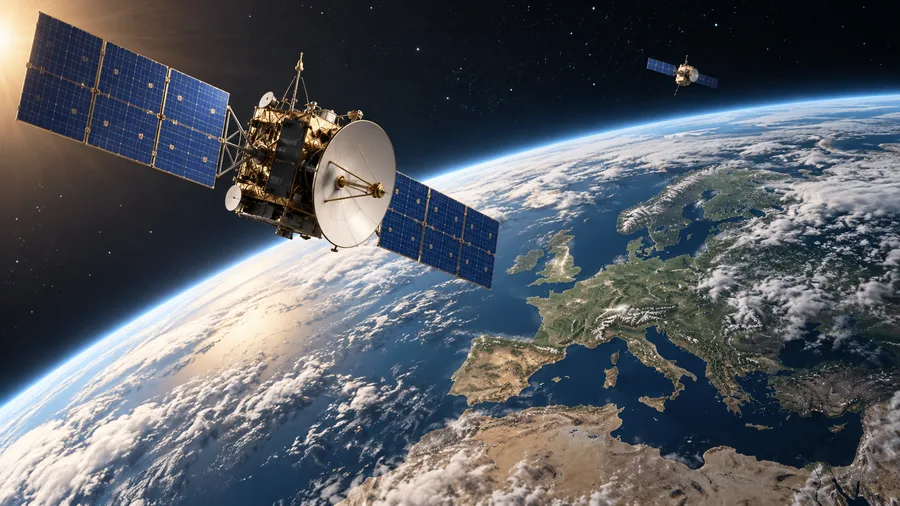
The Strategic Newb image library
Rocket Lab has announced more than $515 million in launch contracts for its unproven Neutron rocket while receiving a conditional $150 million loan commitment from the US Department of Defense. Together, the announcements show how customer demand and industrial policy are financing new space-launch capacity before the vehicle has entered routine service.
Key facts
- Rocket Lab disclosed eight Neutron missions across five constellation operators on November 9, 2026.
- The company values those contracts at more than $515 million.
- Named customers include ICEYE, Muon Space and Starcloud.
- Rocket Lab says the Neutron manifest has reached 16 missions and its base launch price has risen from $55 million to $70 million.
- The Pentagon's Office of Strategic Capital announced a conditional $150 million loan commitment.
- The loan has not closed, and Neutron has not established an operational flight record.
What changed?
Rocket Lab announced what it described as a record quarter for Neutron launch contracts. Eight missions were contracted across five operators, with a reported total value exceeding $515 million.
European satellite-radar company ICEYE booked three dedicated launches beginning in late 2028. Muon Space booked two launches, one in 2029 and another in 2030. Starcloud, which plans to place computing infrastructure in orbit, booked a launch for 2029.
The announced group also includes previously disclosed missions involving Kepler Communications and the United States Space Force.
On the same day, the US Department of Defense's Office of Strategic Capital announced a conditional $150 million loan commitment to Rocket Lab USA.
The proposed financing would support faster vehicle production and processing, additional equipment for maritime recovery and transport, and manufacturing upgrades for composite structures and rocket engines. It could also finance infrastructure intended to reduce turnaround time between launches.
Rocket Lab must still satisfy financial, legal, technical, investment and due-diligence requirements before the loan reaches financial close.
What is the Neutron rocket?
Neutron is Rocket Lab's planned reusable medium-lift launch vehicle. It is designed to deliver approximately 13,000 kilograms into low Earth orbit.
Rocket Lab already operates Electron, a smaller rocket used for dedicated satellite missions. Neutron moves the company into a different part of the launch market, where customers deploy larger spacecraft or multiple satellites together.
The vehicle's first stage is intended to return for recovery at sea. In theory, reuse allows the manufacturer to spread the cost of a rocket stage across multiple missions. The economics work only when recovery is reliable, refurbishment is limited and the vehicle can fly frequently.
Why launch capacity has economic value
Satellite operators need launch dates as well as rockets. A cheaper vehicle has limited value if the provider cannot offer a suitable slot for several years.
Demand for communications, Earth observation, defence and navigation constellations is increasing the need for launch capacity. Delays can postpone satellite revenue, data services and government missions.
Rocket Lab says Neutron's next available launch opportunities now extend into the 2030s. That is a company statement, but the named contracts indicate that customers are reserving capacity years before the planned missions.
An additional provider could improve schedule flexibility and reduce reliance on a small number of launch systems. This is commercially useful for satellite operators and strategically important for governments.
How the Pentagon loan changes the economics
Developing a reusable rocket requires more than building a prototype. The company also needs engine production, composite manufacturing, launch infrastructure, recovery vessels, processing equipment and a trained workforce.
These assets require capital before they generate recurring launch revenue. A government-backed loan can reduce dependence on issuing new shares or finding conventional commercial financing for high-risk infrastructure.
The Pentagon is therefore supporting industrial capacity rather than simply buying one launch. Its stated objective is to expand American launch capability and economic resilience.
That approach transfers some execution risk toward public financing. The conditional structure reduces that exposure because Rocket Lab must complete additional requirements before closing.
The economic mechanism
If Neutron becomes operational, the investment could affect several parts of the economy.
More competition in medium-lift launch
Another reusable provider could create price and schedule competition. Satellite operators may gain negotiating power and more options for dedicated missions.
Additional domestic manufacturing
Producing engines, composite structures and recovery equipment can support suppliers, skilled engineering work and specialised manufacturing facilities in the United States.
Faster constellation deployment
More launch availability could allow communications, radar and scientific constellations to enter service sooner. That can bring forward revenue and data availability for their operators.
Greater national-security resilience
The United States benefits when government payloads are not dependent on one vehicle or launch provider. Multiple systems can reduce vulnerability to a technical failure, accident or capacity shortage.
Who could gain and who could lose?
Rocket Lab and its manufacturing suppliers could benefit from the backlog and financing. ICEYE, Muon Space, Starcloud, Kepler Communications and government customers could gain another medium-lift launch option.
Regions hosting Rocket Lab production and launch activity could gain engineering, manufacturing and infrastructure work.
Incumbent launch providers could face price and schedule competition if Neutron becomes reliable. However, the new rocket could also expand the total market rather than simply take existing missions.
Customers face the clearest downside if development or qualification slips. A contract for a future rocket is not the same as a completed launch. Satellite operators may need contingency plans if schedules change.
What the announcements do not prove
The contract total was announced by Rocket Lab. The company has not yet earned all of that value as completed launch revenue. Contracts may contain milestones, conditions, cancellation terms or schedule provisions that are not fully visible in a press release.
The $150 million government commitment is conditional. It should not be described as cash already delivered.
Most importantly, Neutron has not yet demonstrated routine reusable operations. Launch reliability, recovery success, refurbishment cost and flight frequency will determine whether the planned economics work.
The evidence is therefore Moderate, with Medium confidence in the economic conclusion. There is credible demand and a real financing commitment, but technical execution remains the central uncertainty.
Expected time horizon
The most likely economic impact is within one to three years.
Manufacturing investment and supplier activity can begin before commercial launches. Several named missions are planned from late 2028 onward. Larger effects on launch pricing and market structure depend on Neutron entering routine service.
What should readers watch next?
1. Completion of the loan's closing conditions. 2. Progress toward Neutron's operational debut. 3. Engine and stage qualification results. 4. Recovery and refurbishment performance. 5. Changes to customer launch dates. 6. Contract deposits and backlog conversion into revenue. 7. Additional government certification or launch awards.
The Strategic Newb view
The strongest story is not that Rocket Lab sold several future launches. It is that a private backlog and public industrial financing are being combined to create a new national launch asset.
This is how strategic infrastructure is increasingly built: customers reserve capacity, the government reduces financing constraints, and a technology company scales production before the final operating model has been proved.
The opportunity is significant, but so is the risk. Neutron must turn contracted demand and public support into reliable launches.
Frequently asked questions
How much are Rocket Lab's new Neutron contracts worth?
Rocket Lab reported that eight missions contracted during the quarter were worth more than $515 million in total.
Is the Pentagon giving Rocket Lab $150 million immediately?
No. The Office of Strategic Capital announced a conditional loan commitment. Rocket Lab must satisfy additional requirements before financial close.
Has Neutron launched successfully?
Neutron has not yet established a routine operational flight record. Its commercial economics therefore remain dependent on development, qualification and launch execution.
Why does the United States want another launch provider?
Additional providers can increase launch capacity, create competition and reduce dependence on a small number of systems for commercial and national-security missions.
Editorial note: Contract values, backlog and pricing are based on company disclosures. The loan remains conditional. This article is not investment advice.