How data centre rent overtook bitcoin mining at TeraWulf
Computing leases supplied most of the quarter’s revenue. Delivery dates and building costs help explain what shareholders can earn.
By The Strategic Newb Editorial Team
Event: · Published:
The Strategic Newb
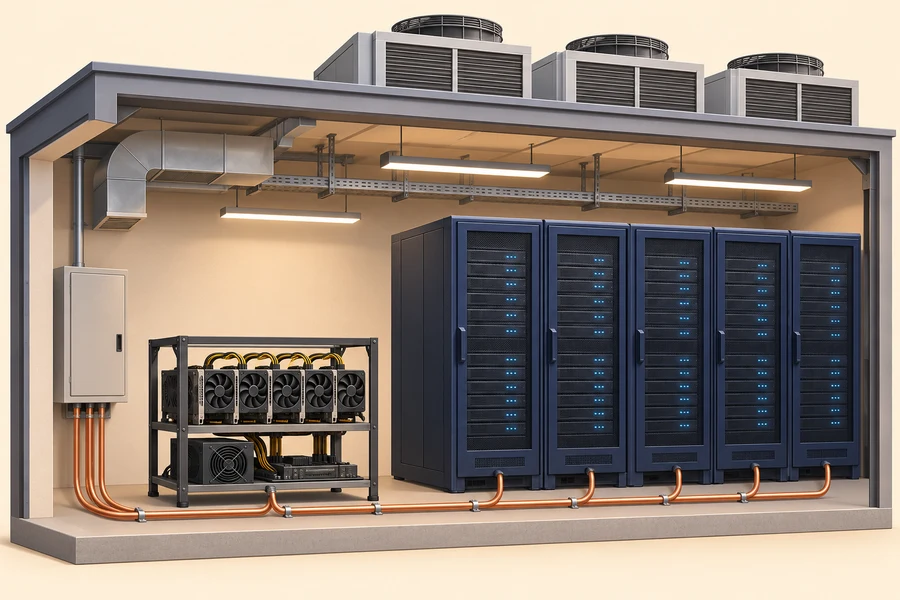
At TeraWulf's Lake Mariner site in New York, a connection to the electricity grid can serve two very different customers. Mining machines consume power to compete for bitcoin rewards. A computing tenant pays to use a facility where it can run equipment. The change from one use to the other is now visible in TeraWulf's accounts. In its 6 November report, the company said high-performance computing leases generated $63 million of its $76.2 million in revenue for the quarter ended 30 September. TeraWulf results
- Leasing supplied about 83% of quarterly revenue. Bitcoin mining continues at the site.
- TeraWulf reported 102 megawatts of revenue-generating computing capacity at Lake Mariner and a further 336 under construction.
- Converting sites changes what can go wrong. Delays, construction costs and the tenant's ability to pay become central to the owner's return.
What a miner sells and what a tenant rents
In bitcoin mining, machines repeatedly perform calculations as part of a competition to add blocks of transactions to the network. Rewards are paid in bitcoin. The operator's earnings in dollars therefore depend on the value of the coins earned, its share of the network's computing power and the cost of running its machines. Electricity has to be paid for even when the dollar value of a reward falls.
A computing lease brings a different arrangement. The tenant needs a site that can supply power, remove heat and keep equipment connected and available under the agreed terms. The facility owner can earn rent when capacity enters service. Its exposure to the daily bitcoin price falls as rent becomes a larger share of sales. In exchange, it depends more on delivering a usable building and collecting payments over the lease.
That distinction matters for anyone holding shares in a company with mining roots. A bitcoin holder owns the digital asset. A TeraWulf shareholder owns a claim on a business after its obligations are met. Its revenue mix can change substantially while the number of bitcoins a particular person holds stays exactly the same. Bitcoin.com's coverage of the quarter also identifies leasing as the principal source of revenue. Independent account
The valuable part of a mining site may be the connection
Land with access to substantial electrical capacity gives a developer a starting point. It still has to deliver the particular environment a tenant needs. Equipment designed to mine bitcoin performs a specialised job. Moving into computing leases may involve replacing equipment, building new halls, changing cooling arrangements and proving that systems can operate reliably together. TeraWulf describes repurposing portions of its existing Lake Mariner infrastructure.
A megawatt measures power. In its results the company identifies capacity for the customer's computing equipment as critical IT capacity. The distinction between capacity in service and capacity under construction is crucial. At quarter-end the 102 megawatts in service could generate revenue. A future hall can incur construction costs today while its first rent payment is still some distance away. Adding both numbers together and applying today's rent to the total would bring future income into the calculation too early.
Why growing lease revenue can coexist with an operating loss
Revenue measures what the business earned from customers before expenses. TeraWulf reported a quarterly operating loss of about $88 million. Moving from mining to leasing can change sales faster than it changes the costs associated with buildings, staff and equipment. Depreciation, which allocates the cost of long-lived assets over time, also affects operating results. Receiving rent on one building does not cover the cost of every project automatically.
Net income tells another part of the story. The company said a change in the accounting value of warrants helped lift net income. A warrant is a right to buy shares on specified terms. A change in its accounting value can affect reported profit without a corresponding payment from a tenant. To understand the leasing operation, follow rent, operating expenses and the cash needed to complete construction separately. Company financial statements
What the next one to three years can show
The quarter provides evidence of commercial use at Lake Mariner. The buildings under construction face a different test. Over the next one to three years, look for actual handovers, the commencement of rent and the cost of getting each phase into service. A signed agreement gives a developer a customer to build for. A delay can still leave it paying construction or financing costs before it receives the expected rent.
Tenants gain access to powered facilities without developing every site themselves. Owners gain a possible source of recurring income, but a site fitted for one large customer can take time and money to adapt for another. Beyond the construction period, renewals, maintenance and the condition of the equipment will matter. The figures already show that TeraWulf sells a different mix of services. Its ability to convert that mix into lasting cash earnings remains an open question.