German Taxi Operator Plans Up to 500 Robotaxis Under a Subscription Model
The Strategic Newb Editorial Team
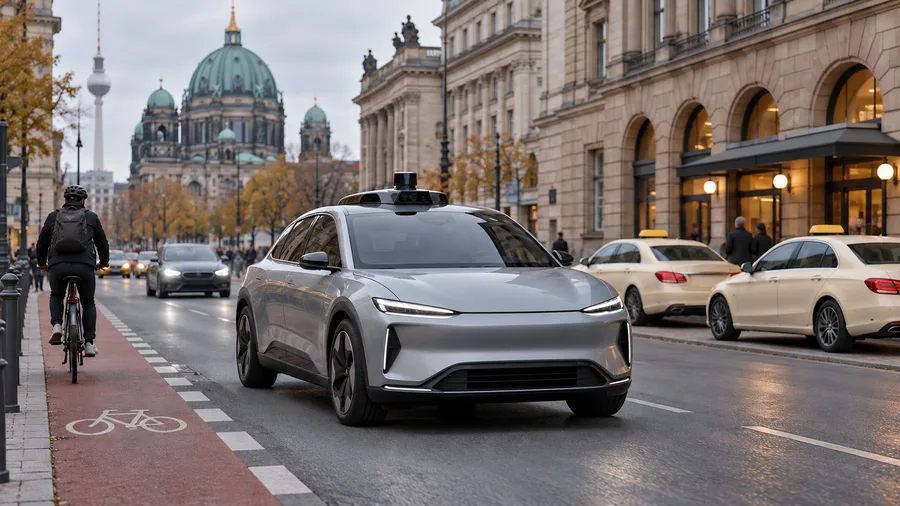
Munich’s largest taxi operator, according to the joint announcement, wants to introduce up to 500 autonomous taxis without surrendering its brand, customers or operating data to a technology platform.
Münchner Taxi Zentrum, also known as MTZ, and autonomous vehicle developer Tensor Auto signed a letter of intent on October 27, 2026. Under the proposed arrangement, MTZ would operate the vehicles while Tensor supplies the autonomous technology through a recurring subscription.
The proposal introduces an important alternative to the business model used by many robotaxi companies. Instead of allowing the technology provider to control the vehicles, booking platform and customer relationship, local taxi operators could subscribe to autonomous driving as infrastructure.
The agreement is still conditional. It is not a completed order for 500 vehicles, and commercial deployment requires definitive contracts and German approval for Level 4 autonomous operation.
What MTZ and Tensor announced
The companies plan an initial fleet of up to 500 Tensor Robocars in German cities. MTZ would operate the service under its existing brand and integrate the autonomous vehicles into its current dispatch system.
Passengers would continue booking through MTZ’s normal channels. The taxi operator would decide where and when the vehicles operate, subject to cooperation with local authorities.
Tensor would sell the vehicles and provide autonomous-driving software, fleet-management tools, servicing and training through a subscription. It calls this model Autonomous Driving as a Service, or ADaaS.
No financial terms, initial cities or deployment date have been disclosed. The companies also say they want to place 10,000 additional vehicles with European taxi and fleet operators within 24 months after the vehicle becomes available in the region. That figure is a corporate target, not a confirmed order book.
What Level 4 autonomous driving means
Level 4 autonomy allows a vehicle to drive without a human driver inside a defined operating area and under specified conditions. The vehicle must be capable of handling the driving task and reaching a safe state if a problem occurs.
Level 4 does not mean the vehicle can drive everywhere in every weather condition. A robotaxi may be limited to mapped streets, approved cities, particular speeds or acceptable weather.
This distinction is important because commercial autonomy depends on more than vehicle capability. Regulators must approve where the system can operate, companies must demonstrate safety and operators need systems for maintenance, cleaning, charging, customer assistance and emergencies.
Why the subscription model matters
Many robotaxi companies follow a vertically integrated model. The technology company develops the autonomous system, owns or controls the fleet, operates the booking application and collects passenger data.
That structure gives the technology provider a large share of the economic value. Traditional taxi companies risk becoming unnecessary because the platform controls both the vehicle and the customer.
The MTZ–Tensor model separates those roles. Tensor provides the autonomous system, while MTZ remains the transport operator. If the model works, established taxi businesses could automate without giving up their brands, local knowledge and customer relationships.
This resembles the development of cloud computing. Companies no longer need to build every digital system themselves; they subscribe to infrastructure supplied by a specialist. Tensor is attempting to apply that logic to physical transport.
The economic impact on taxi services
Labour is one of the largest costs in taxi operations. Reliable autonomous vehicles could reduce the number of paid driving hours required to operate a fleet. Vehicles might also work for longer periods because they would not need normal driver breaks.
However, removing the driver does not eliminate every operating cost. Robotaxis still require:
- Vehicle financing or leasing.
- Autonomous-driving subscriptions.
- Insurance.
- Maintenance and sensor calibration.
- Cleaning and charging.
- Remote support and emergency response.
- Regulatory reporting and cybersecurity.
The final cost advantage will depend on whether lower labour expenses exceed the price of vehicles, software and additional operational requirements.
Could taxi operators compete with technology platforms?
Local taxi operators already have dispatch systems, licences, maintenance relationships and knowledge of passenger demand. They may also have trusted local brands and contracts with airports, hotels, hospitals or businesses.
Autonomous-driving subscriptions could allow them to combine those assets with technology they could not develop independently.
This creates a different competitive structure. Tensor could sell its system to many operators instead of building a separate taxi service in every city. Operators could choose between technology suppliers while keeping control of their customer base.
The model could reduce the risk that one robotaxi platform dominates urban transport. It may also create a market in which autonomous-driving providers compete on subscription price, safety, reliability and service quality.
What it means for employment
Commercial robotaxis could reduce demand for professional drivers. The disruption would be greatest if vehicles operate without safety drivers for most journeys.
New roles could emerge in fleet supervision, cleaning, maintenance, remote assistance, cybersecurity and sensor servicing. Those jobs are unlikely to match driving employment one for one, and they may require different training.
The labour effect will depend on the speed of deployment. A letter of intent does not produce immediate job losses. Regulation, vehicle availability and real-world reliability could slow the transition.
Taxi companies may initially use autonomous vehicles to cover driver shortages, night shifts or routes that are difficult to staff. That could delay direct displacement while still changing the structure of the occupation.
Who could gain?
MTZ could reduce operating costs and defend its customer relationships. Tensor could generate recurring software and service revenue without building a passenger platform in every market.
Other European taxi operators could gain access to autonomy while retaining control of their businesses. Passengers might benefit from shorter waiting times or lower prices if automation reduces costs.
Companies providing fleet maintenance, sensor calibration, remote operations, mapping and cybersecurity could receive additional demand.
Who could lose?
Taxi drivers face the clearest long-term disruption. Ride-hailing platforms could also lose influence if traditional operators gain autonomous technology without joining their networks.
Smaller taxi companies may struggle to finance expensive vehicles or subscription fees. If only large operators can afford autonomy, the market could consolidate even when the technology provider does not control the fleet directly.
Tensor and MTZ also carry commercial risk. If regulatory approval is delayed or the vehicles require too much remote support, the cost advantages may not materialise.
Regulation remains the decisive barrier
Germany has a legal framework for autonomous driving, but individual services still require approval for their vehicles and defined operating areas.
The MTZ agreement is therefore a commercial plan, not permission to operate. The companies must demonstrate that the vehicles satisfy technical, cybersecurity and operational requirements.
No deployment timetable should be treated as certain until definitive agreements, approved operating areas and commercial vehicle availability are confirmed.
The larger strategic question
The robotaxi debate is often framed as a competition between technology companies. The MTZ–Tensor agreement creates another possibility: autonomy may become a service used by existing transport businesses.
If this structure succeeds, the economic winner may not be the company that owns every taxi. It may be the company that supplies a reliable autonomous-driving layer to thousands of independent fleets.
That would make autonomous-driving software resemble an operating system for transport. Local companies would continue managing passengers and vehicles, while a technology supplier operates in the background.
Frequently asked questions
Are 500 robotaxis definitely coming to Germany?
No. The companies signed a letter of intent covering up to 500 vehicles. The plan still requires final contracts, vehicle availability and regulatory approval.
Will the robotaxis operate without drivers?
The planned system targets Level 4 autonomy, which can operate without a human driver inside approved areas and conditions. Commercial approval has not yet been granted for this fleet.
What is Autonomous Driving as a Service?
It is a subscription model in which a technology company supplies autonomous-driving software and related services while another company operates the vehicles.
When will the vehicles launch?
No confirmed deployment date has been announced.
Is this investment advice?
No. This article analyses the business model and its potential economic effects.
Sources
- Reuters — MTZ and Tensor plan up to 500 German autonomous taxis
- Tensor and MTZ — Joint announcement
- German Federal Ministry of Transport — Autonomous-driving framework
Editorial note
The letter of intent and proposed operating model are confirmed. Fleet size, timing, cities, regulatory approval and commercial performance remain uncertain. This article contains economic analysis and no personal investment advice.