Investing in technology: how AI and robotisation can increase our prosperity
Translated from the original; figures and sources have been preserved. Read the original →
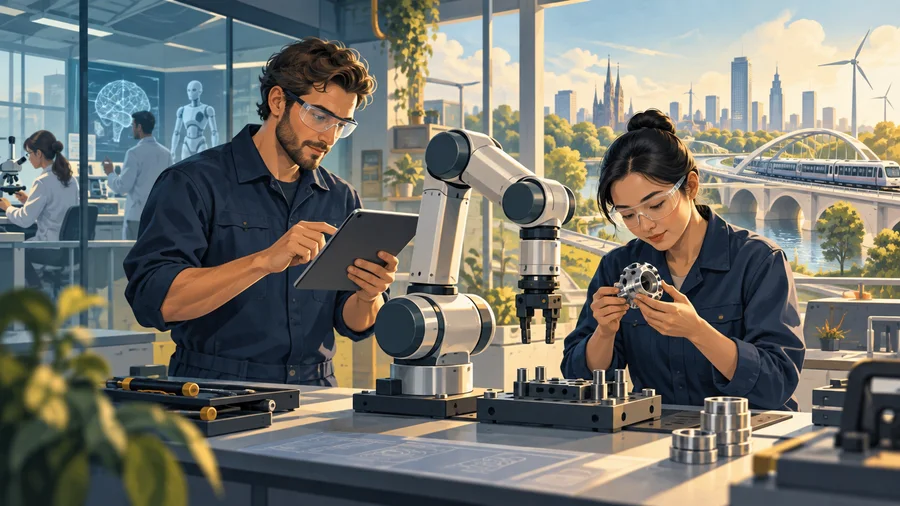
A robot that takes over heavy work. An AI system that accelerates administrative tasks. Software that helps a small company to work more efficiently. Investing in technology can save people time and make businesses more productive. The social opportunity continues: the same progress can provide the basis for greater prosperity and financial security.
The previous article focused on a [basic income for everyone in the European Union](/basisinkomen-eu-ai-robotisering). It mainly explored how to distribute prosperity when paid work changes. This follow-up starts one step earlier: how do we create the prosperity we want to share?
AI and robotisation can contribute to this. For this, Europe needs to invest in technology, in the people who work with it and in agreements on who benefits from the profits.
Why investing in technology is important
Prosperity depends on how much value we can create with our available time, knowledge and resources. Technology can increase productivity.
Think of a manufacturer who reduces waste material, a mechanic who finds a fault faster or an entrepreneur who spends less time on administration. When the same work costs less time and resources, space is created for other activities.
The OECD sees evidence that AI can improve performance in certain tasks. The extent to which this ultimately continues to work throughout the economy remains uncertain and depends, inter alia, on the application and dissemination of the technology. Source: OECD
More productivity creates opportunities: higher wages, lower prices, better services, more profits or shorter working hours. Which ones become reality depends on the choices of companies, employees and public authorities.
AI and robotisation can help cope with staff shortages
The debate on automation is often about jobs disappearing. Another relevant question is how much necessary work remains because there are insufficient people available.
Technology can help by taking over certain tasks or making them easier. Possible applications are:
- Administrative support, so employees spend less time entering the same data twice.
- Robots carrying out heavy or repetitive operations.
- Maintenance support, allowing technicians to focus more on troubleshooting.
- Planning software that helps better use available employees and materials.
The advantage must be demonstrated in practice. A system that needs constant corrections can cause additional work. Therefore, an investment also involves an assessment of the time savings, quality and workload.
Less routine can give room for better work
Many jobs consist of a combination of recurring tasks, personal contacts and decisions that require experience. When technology takes over part of the routine, more time may become available for the other parts.
For example, an employee could draft a document more quickly and then spend more time checking it and providing advice. A skilled worker could use a robot for a physically demanding task and focus on finishing and quality.
This requires training and employee participation. Workers need to understand what a system does well, where it makes mistakes and when they need to intervene.
OECD research links productivity benefits at firms using AI to complementary capabilities, including digital infrastructure, ICT skills and good management. Simply purchasing software is therefore not enough. Source: OECD
Why Europe itself needs to develop technology
For Europe, it is also relevant where technology is being developed and who owns it. When European companies and public institutions build up their own knowledge, they will have more opportunities to influence products, conditions and applications.
Investing can take various forms: funding scientific research, helping young companies grow, improving digital infrastructure or supporting existing companies in applying new techniques.
Smaller companies should also be able to participate. If only the largest companies have access to expertise and computing power, the benefits will be limited to part of the economy.
European competitiveness policy focuses on innovation and reducing strategic dependencies. Technology development thus fits in with a broader ambition to strengthen the European economy. Source: Council of the European Union
From technological profit to a European basic income
Here you can see the connection to the previous article. If AI and robots help create more economic value, it can increase the scope for social services. But corporate profits do not automatically change into public income.
This requires decisions about taxation, ownership and public investment. Examples include:
- Taxing profits that are partly generated by automation.
- Public investment funds that participate in companies under clear conditions and share any proceeds.
- Employee participation, allowing employees to benefit from the success of their company.
- Investment in public services that reduce household costs.
Some of the available public funds could then support a basic income. Determining how much would require a detailed financial calculation.
Technological growth does not guarantee funding for a basic income. A more productive economy can, however, offer more ways to provide financial security.
Does more automation also mean more leisure time?
Higher production per hour worked can give room for a shorter working week. If a team achieves the same result in less time, part of that profit can be used to reduce working time.
This only happens when employers and workers reach agreements and the financial capacity exists. The gains could instead be used to expand production, invest or increase profits.
That is why free time deserves to be included in the debate on technological progress. For people an extra free afternoon can be as valuable as more consumption: time for children, care, study or recovery.
A basic income and shorter working hours are different policy choices, but they raise the same question: how much of our lives should depend on paid work when technology makes us more productive?
Does investing in technology only have advantages?
No investment has only advantages. New systems cost money, can be disappointing and sometimes bring additional energy consumption or dependence on suppliers. Automation can also make functions disappear before people find suitable work elsewhere.
A strong investment policy takes these consequences into account. It assesses technology against concrete results and supports people through the transition.
There are three practical questions:
- What improvement does this investment bring? Think of time savings, quality, safety or less material use.
- Who receives the proceeds? Only the owner, or also employees, customers and society?
- What do people need to be able to participate? For example, education, guidance or temporary income security.
Thus investing in technology becomes a targeted choice with testable goals.
Build technology that everyone can benefit from
Europe has good reasons to invest in AI and robotisation. These technologies can help to carry out work more efficiently, improve services and create economic value.
The next step is to ensure that this value reaches a wide range. This can be done through wages, affordable products, better public services, more leisure time and possibly a basic income.
The debate about a European basic income and the debate about technological investment therefore belong together. One concerns financial security; the other can help create the economic capacity to support it.
The ambition must be that better technology also leads to a better daily life.
Frequently asked questions about investing in technology
Why should governments invest in AI and robotisation?
Governments can support research, infrastructure and training that many businesses and citizens benefit from. Whether a specific investment is meaningful depends on the expected social return, the costs and the alternatives.
Does AI automatically ensure economic growth?
No. AI can make certain tasks more productive, but broad economic growth also depends on reliable applications, skills, investment costs and technology diffusion.
Can robotisation pay a basic income?
Robotisation can contribute to additional economic value. Whether sufficient public income is generated for a basic income depends on the tax and ownership structure, the level of basic income and the other public expenditure.
Should small companies also be able to invest in AI?
Yes, suitable applications can also be useful for small businesses. Access to knowledge, training and affordable resources can prevent the benefits from reaching large companies only.