What happens if bitcoin becomes worth €1 million?
Updated:
Translated from the original; figures and sources have been preserved. Read the original →
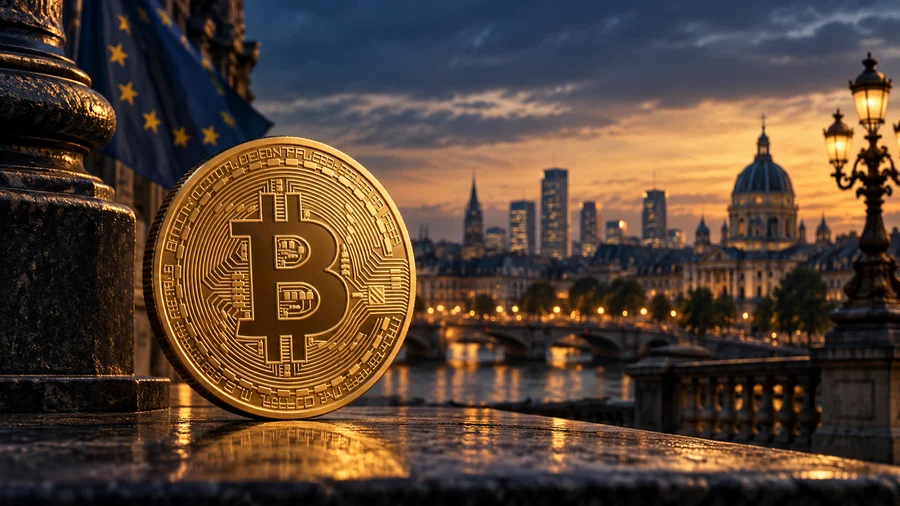
Imagine opening your phone and seeing one bitcoin priced at €1,000,000. For holders, it sounds like a dream fulfilled. But the more interesting question is: what would have to happen in the world for that price to make sense?
A million euros per bitcoin would be much more than a record on a chart. With around 20.1 million coins circulating on 29 September 2026, it represents a market value of roughly €20 trillion. That is a snapshot of price multiplied by supply: it does not require literally €20 trillion of new money to have flowed in. The limited maximum supply of 21 million BTC makes a high unit price possible, but does not guarantee it. Source 1 · Source 2
There are different routes to that million. Some would signal growing confidence in bitcoin. Others would say something troubling about the money used to measure its price.
Scenario 1: Bitcoin becomes a global reserve asset
If large asset managers, pension funds, companies and potentially governments hold a small proportion of reserves in bitcoin for years, demand for its limited supply could rise sharply. That is a conceivable scenario, not a prediction that these institutions will enter en masse.
Access for professional investors has already changed: in January 2024, the US SEC approved trading in spot bitcoin exchange-traded products. Approval is not an endorsement of bitcoin or a guarantee of future appreciation. Source 1
At €1 million, the debate would shift from whether bitcoin belongs in a portfolio to how large its allocation should be. Banks, custodians and regulators would face greater exposures and associated risks. It still would not mean most people pay for groceries in bitcoin: an investment asset can become large without becoming a widely used payment method.
Scenario 2: The euro loses purchasing power
A price is always a relationship between two things. If bitcoin rises from €100,000 to €1 million, that is a tenfold nominal increase. But what if houses, food and wages become much more expensive over the same period?
Then €1 million tells only part of the story. The ECB explains that inflation erodes money’s purchasing power: the same euros buy fewer goods and services. A bitcoin millionaire on paper is therefore not automatically ten times richer in real terms. Source 1
The question that matters: what can one bitcoin buy when it costs €1 million? One home, ten homes, or less than today? Without that comparison, the number is mainly spectacular.
Scenario 3: A price bubble briefly pushes bitcoin over the threshold
A million could also briefly appear on screen because of speculation, cheap credit or fear of missing out. The quoted price is the last transaction’s price; not everyone can sell their bitcoin for exactly that amount at once. If many holders want to exit, the price can change quickly.
This would make the €1 million threshold historic, but not sustainable. European regulation does not eliminate investment risk either. ESMA explains that MiCA provides a crypto-market framework while uncertainty and volatility remain. Source 1
What would €1 million mean for other cryptocurrencies?
Many investors might expect ether, solana and smaller coins to rise automatically. They need not. If demand mainly reflects a desire to hold a scarce, familiar reserve asset, money could instead flow into bitcoin at the expense of riskier tokens.
In a speculative boom, altcoins may temporarily rise faster. In a correction, they may fall faster too. Bitcoin’s price alone says nothing about another project’s quality, cash flows or usefulness.
What would your bitcoin be worth?
| Amount of BTC | Value at €1 million per BTC |
|---|---|
| 0.01 BTC | €10,000 |
| 0.05 BTC | €50,000 |
| 0.10 BTC | €100,000 |
| 0.50 BTC | €500,000 |
| 1.00 BTC | €1,000,000 |
These are gross market values. Actual proceeds depend on the sale price, transaction costs and your tax circumstances. A portfolio value on screen is also different from euros guaranteed to be available.
The biggest change: bitcoin becomes systemically important
At around €20 trillion of market value, a sharp fall would affect more than crypto investors. Investment products, institutions and companies with large exposures could feel the effects. Transmission to the wider economy would depend on debt, leverage and interconnectedness at the time. That is an inference from the scenario’s scale, not a certain outcome.
A high price could also prompt new debates: how much risk should pension funds take, how should providers protect customers, and how should governments assess energy use and taxation? Europe already has a crypto-asset framework in MiCA; further decisions would depend on what actually changes. Source 1
So will bitcoin ever reach €1 million?
Nobody knows. A €1 million price is mathematically possible, but the path determines its meaning. A million driven by lasting global demand is different from a million caused by euro inflation or a short-lived bubble.
The real question is therefore not only when will bitcoin reach €1 million? Also ask: how much purchasing power would it represent, who bears the risk, and what happens if the price then halves? That is where the economic analysis begins.
Frequently asked questions
How large would bitcoin be at €1 million per coin? With roughly 20.1 million coins circulating, market value would be around €20 trillion. The exact amount changes with circulating supply.
Must €20 trillion be invested in bitcoin to reach that market value? No. Market value is the last traded price multiplied by the number of coins. It is neither the sum of all euros invested nor an amount every holder can withdraw simultaneously.
Would all other cryptocurrencies become more valuable too? No. Their prices depend on their own demand, supply and risks.
Does €1 million per bitcoin mean ten times the purchasing power? No. You must compare changes in the prices of goods, services and other assets with bitcoin’s rise.
Further reading
Bitcoin in wartime · Paying during an outage · European rules for crypto platforms